Are milk glass bottles biodegradable?
Leave a message

Are milk glass bottles biodegradable?
As a supplier of milk glass bottles, I often get asked various questions about our products, and one that comes up quite frequently is whether milk glass bottles are biodegradable. This is an important question, especially in today's environmentally - conscious world where consumers are more aware of the impact their purchases have on the planet.
Let's first understand what biodegradability means. Biodegradable materials are those that can be broken down by natural processes and organisms, such as bacteria and fungi, into simpler substances like water, carbon dioxide, and biomass over a relatively short period. For example, organic materials like food waste, paper, and some types of plant - based plastics are biodegradable.
Now, let's turn our attention to milk glass bottles. Milk glass, also known as opal glass, is a type of glass that has a milky, opaque appearance. It is made from a combination of silica (sand), soda ash, limestone, and other additives. Glass, in general, is an inorganic material. Unlike organic substances, glass does not contain carbon - based compounds that can be easily broken down by biological agents.
The chemical structure of glass is highly stable. The silicon - oxygen bonds in glass are very strong, and natural organisms do not have the enzymes or mechanisms to break these bonds. This means that glass, including milk glass bottles, is not biodegradable. A milk glass bottle discarded in the environment will not decompose on its own like a piece of fruit peel or a paper bag. In fact, it can remain in the environment for thousands of years.
However, this does not mean that milk glass bottles are bad for the environment. One of the key advantages of glass is its recyclability. Glass can be recycled indefinitely without losing its quality or purity. When a milk glass bottle is recycled, it is crushed into cullet (small pieces of glass), which is then melted down and used to make new glass products. Recycling glass reduces the need for raw materials like sand, soda ash, and limestone, and it also saves energy compared to producing new glass from scratch.

At our company, we are committed to promoting the recycling of our milk glass bottles. We believe that by encouraging consumers to recycle, we can minimize the environmental impact of our products. We also work with recycling facilities to ensure that the collected glass is properly processed and reused.
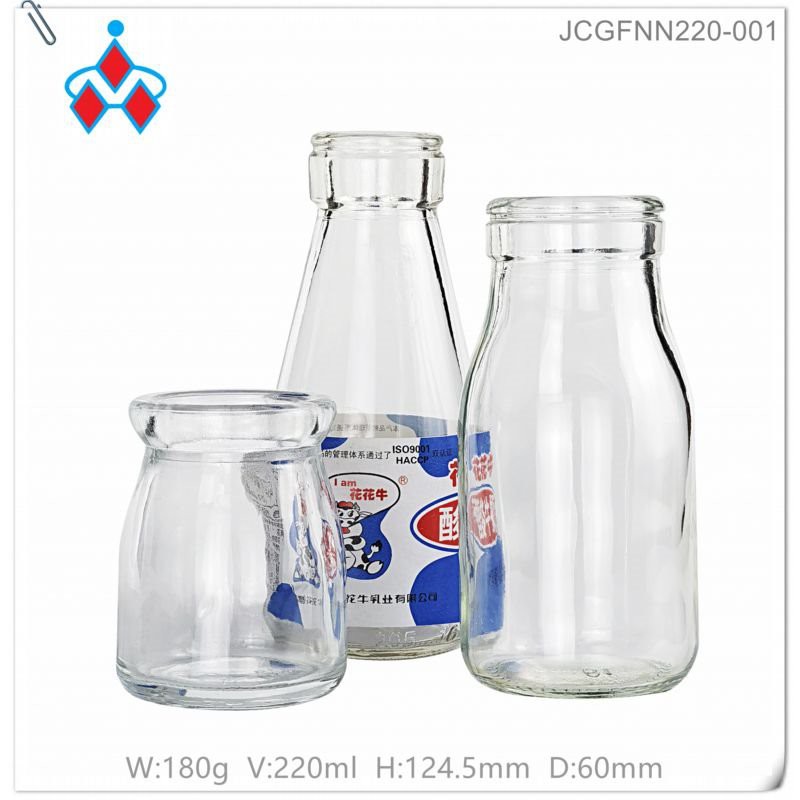
Our Milk Glass Bottle 220ml is a popular product among our customers. It is made with high - quality milk glass, which not only looks elegant but also provides excellent protection for the milk inside. The opaque nature of the milk glass helps to block out light, which can cause the milk to spoil more quickly. You can learn more about our Milk Glass Bottle 220ml on our website.
In addition to recyclability, milk glass bottles have other environmental benefits. They are reusable. Consumers can wash and reuse the milk glass bottles multiple times for storing other liquids or even for decorative purposes. This extends the lifespan of the bottle and further reduces waste.
Another aspect to consider is the energy efficiency of glass production. Modern glass manufacturing processes have become more energy - efficient over the years. By using advanced technologies and optimizing production methods, we can reduce the energy consumption and greenhouse gas emissions associated with making milk glass bottles.
When comparing milk glass bottles to other packaging materials, such as plastic or cardboard, glass has some clear advantages. Plastic bottles, although lightweight and cheap to produce, are often made from non - renewable resources and can take hundreds of years to break down in the environment. Many types of plastic are also difficult to recycle, and a large amount of plastic waste ends up in landfills or the ocean. Cardboard cartons, while biodegradable, may require a significant amount of water and energy to produce, and they may also be lined with plastic or wax, which can complicate the recycling process.
As a supplier, we are constantly looking for ways to improve the environmental performance of our milk glass bottles. We are exploring new manufacturing techniques that can further reduce energy consumption and emissions. We are also working on educational campaigns to raise awareness about the importance of recycling glass.
If you are a business looking for a sustainable packaging solution for your milk products, or if you are a consumer interested in reducing your environmental footprint, our milk glass bottles are a great choice. We offer a range of sizes and designs to meet your specific needs. Whether you are a small dairy farm or a large - scale milk producer, we can provide you with high - quality milk glass bottles that are both functional and environmentally friendly.
We understand that making the switch to glass packaging may require some investment and adjustment. That's why our team is here to support you every step of the way. We can provide you with detailed information about our products, including their features, benefits, and recycling options. We can also work with you to develop customized packaging solutions that fit your brand image and marketing strategy.
If you are interested in purchasing our milk glass bottles or have any questions about our products, please feel free to contact us. We are eager to start a conversation with you and explore how we can work together to create a more sustainable future.
References
- "The Science of Glass Recycling." Glass Packaging Institute.
- "Environmental Impact of Different Packaging Materials." Journal of Sustainable Packaging.
- "Advances in Glass Manufacturing Technologies." International Journal of Glass Science and Technology.