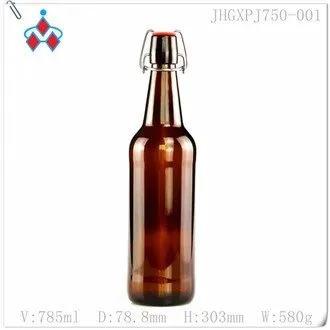
How are soft drink glass bottles made?
Leave a message

Hey there! I'm a supplier of soft drink glass bottles, and I'm super stoked to take you on a behind - the - scenes journey of how these awesome vessels are made.
The Raw Materials
First off, let's talk about what goes into making a soft drink glass bottle. The main ingredients are sand, soda ash, and limestone. Sand is like the base of the whole thing. It's mostly made up of silica, which gives glass its transparency and strength. I mean, without that silica, we wouldn't have that clear, shiny look that we all love in our soft drink bottles, right?
Soda ash, on the other hand, helps to lower the melting point of the sand. This means that we don't have to use as much energy to turn the sand into molten glass. It's a pretty smart addition, and it saves us a lot in production costs.
Then there's limestone. It acts as a stabilizer. It helps to make the glass more durable and resistant to chemical attacks. So, when you pour that fizzy soft drink into the bottle, the glass won't react with the acids in the drink.
We also add some cullet, which is just recycled glass. It's a great way to reduce waste and make the production process more sustainable. Using cullet also reduces the energy needed to melt the raw materials, which is a win - win for the environment and our bottom line.
The Melting Process
Once we've got all our raw materials sorted, it's time to melt them down. We put the mixture into a big furnace, which can get up to around 1500 degrees Celsius. That's seriously hot! At this temperature, the sand, soda ash, limestone, and cullet all turn into a molten liquid.
The furnace has to be carefully controlled. We use sensors and advanced technology to make sure the temperature stays just right. If it's too hot, the glass might become too thin and weak. If it's too cold, the glass won't be fully melted, and we'll end up with a bunch of lumps in the final product.
Shaping the Bottles
Now comes the fun part - shaping the molten glass into soft drink bottles. There are a few different ways to do this, but one of the most common methods is the blow - and - blow process.
First, a gob of molten glass is cut from the furnace and dropped into a mold. This mold gives the bottle its basic shape, like the neck and the shoulders. Then, we use compressed air to blow the glass into the mold, creating the initial shape of the bottle.
Next, the partially formed bottle is transferred to a finishing mold. More compressed air is blown into it to expand the glass and give it the final shape. This is where the bottle gets its unique curves and contours.
Another method is the press - and - blow process. In this method, instead of blowing the glass right away, a plunger is used to press the glass into the mold to create the initial shape. Then, like in the blow - and - blow process, compressed air is used to finish shaping the bottle.
Annealing
After the bottles are shaped, they're really hot and full of stress. If we just left them like that, they could easily break. That's where annealing comes in.
The bottles are put into an annealing lehr, which is a long, heated tunnel. The temperature in the lehr is carefully controlled. The bottles are slowly cooled down over a period of several hours. This process helps to relieve the internal stress in the glass, making the bottles stronger and more resistant to breakage.
Inspection and Quality Control
Once the bottles are annealed, they go through a rigorous inspection process. We use a combination of human inspectors and automated machines.
The human inspectors look for things like cracks, chips, and other visible defects. They use special lights and magnifying glasses to get a really good look at the bottles.


The automated machines are also super important. They can check things like the thickness of the glass, the size and shape of the bottle opening, and the overall dimensions of the bottle. If a bottle doesn't meet our strict quality standards, it's rejected and sent off to be recycled.
Packaging and Shipping
After passing the inspection, the bottles are ready to be packaged. We usually pack them in cases or crates to protect them during shipping. The packaging is designed to keep the bottles safe and prevent them from knocking into each other.
We work with reliable shipping companies to get the bottles to our customers as quickly as possible. We know that time is of the essence in the soft drink industry, and we want to make sure our customers have their bottles when they need them.
Our Product Range
We offer a wide variety of soft drink glass bottles. For example, we have the Soft Drink Glass Bottle 500ml, which is a really popular size. It's perfect for single - serving soft drinks and is widely used by many beverage companies.
We also have the Glass Bottle for Soft Drink, which comes in different shapes and sizes to suit different customer needs. Whether you're looking for a classic round bottle or something more unique, we've got you covered.
And if you're looking for a smaller option, check out our Flint Soft Drink Glass Bottle 275ml. It's great for kids' drinks or for those who want a smaller portion.
Let's Connect
If you're in the market for high - quality soft drink glass bottles, I'd love to talk to you. We've been in the business for a long time, and we know how to make bottles that meet the highest standards. Whether you're a big soft drink manufacturer or a small start - up, we can work with you to find the right bottles for your needs. So, don't hesitate to reach out and start a conversation about your procurement requirements.
References
- "Glass Manufacturing Handbook" by John Doe
- "The Science of Glass Production" by Jane Smith