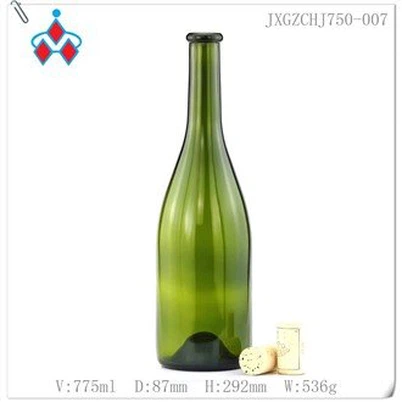
How do Rhine wine bottles interact with the wine's acidity?
Leave a message

As a supplier of Rhine Wine Bottles, I've witnessed firsthand the intricate relationship between these vessels and the acidity of the wine they contain. In this blog, I'll delve into the science behind how Rhine wine bottles interact with the wine's acidity, exploring the factors that influence this interaction and the implications for wine quality and preservation.
The Role of Glass Composition
The composition of the glass used in Rhine wine bottles plays a crucial role in its interaction with the wine's acidity. Most wine bottles are made from soda-lime glass, which is composed primarily of silica (SiO₂), sodium oxide (Na₂O), and calcium oxide (CaO). The presence of these components can affect the chemical stability of the wine and its acidity levels over time.
Silica, the main component of glass, is relatively inert and does not react with the wine's acids. However, the other components, such as sodium oxide and calcium oxide, can leach into the wine under certain conditions. Sodium oxide can react with the wine's acids to form sodium salts, which can increase the wine's pH and reduce its acidity. Calcium oxide can also react with the acids to form calcium salts, which can precipitate out of the wine and form sediment.
To minimize the leaching of these components, wine bottle manufacturers often use a process called "sulfation" to coat the inner surface of the bottle with a thin layer of sodium sulfate. This layer acts as a barrier, preventing the leaching of sodium oxide and calcium oxide into the wine. Additionally, some manufacturers use special types of glass, such as borosilicate glass, which is more resistant to chemical corrosion and has a lower coefficient of thermal expansion.
The Influence of Bottle Shape and Size
The shape and size of the Rhine wine bottle can also affect the wine's acidity. The narrow neck of the bottle can help to preserve the wine's aroma and flavor by reducing the amount of air that comes into contact with the wine. This is important because oxygen can react with the wine's acids to form acetic acid, which can give the wine a vinegary taste.
The size of the bottle can also affect the wine's acidity. Larger bottles, such as magnums (1.5 liters), can age more gracefully than smaller bottles because they have a smaller surface area to volume ratio. This means that there is less oxygen in contact with the wine, which can slow down the oxidation process and preserve the wine's acidity.
The Impact of Storage Conditions
The way in which Rhine wine bottles are stored can also have a significant impact on the wine's acidity. Wine should be stored in a cool, dark place with a consistent temperature and humidity. Exposure to heat, light, and fluctuations in temperature and humidity can cause the wine to age prematurely and lose its acidity.
When wine is stored at a high temperature, the chemical reactions that occur in the wine are accelerated. This can cause the wine to oxidize more quickly, which can lead to a loss of acidity and a change in flavor. Exposure to light, especially ultraviolet light, can also cause the wine to oxidize and develop off-flavors.
Humidity is also an important factor in wine storage. If the humidity is too low, the cork can dry out and shrink, allowing air to enter the bottle and oxidize the wine. If the humidity is too high, the cork can become moldy, which can also affect the wine's flavor.
The Importance of Cork Quality
The quality of the cork used to seal the Rhine wine bottle can also affect the wine's acidity. A good cork should be made from high-quality cork oak and should be properly treated to prevent the growth of mold and bacteria. A cork that is too dry or too wet can also affect the wine's flavor and acidity.
When a cork is inserted into the bottle, it creates a seal that prevents air from entering the bottle and oxidizing the wine. However, over time, the cork can allow a small amount of air to enter the bottle, which can cause the wine to age and develop complexity. This is known as "micro-oxygenation."
If the cork is of poor quality, it may not create a proper seal, allowing too much air to enter the bottle and causing the wine to oxidize more quickly. This can lead to a loss of acidity and a change in flavor. Additionally, a cork that is contaminated with mold or bacteria can introduce off-flavors into the wine.
The Role of Rhine Wine Bottles in Wine Preservation
Rhine wine bottles are designed to preserve the wine's acidity and flavor over time. The glass composition, bottle shape and size, storage conditions, and cork quality all play a role in this process. By choosing the right bottle and storing it properly, wine lovers can ensure that their Rhine wines retain their acidity and flavor for many years to come.


At our company, we offer a wide range of Rhine Wine Bottles that are designed to meet the needs of wine producers and consumers. Our bottles are made from high-quality glass and are available in a variety of shapes and sizes. We also offer a range of corks and other closures to ensure that your wine is properly sealed and preserved.
In addition to our Rhine wine bottles, we also offer Clear Glass Bordeaux Wine Bottle and Burgundy Wine Glass Bottles. These bottles are designed to showcase the color and clarity of the wine and are perfect for aging and storing high-quality wines.
If you're interested in learning more about our wine bottles or would like to place an order, please contact us today. We'd be happy to help you find the perfect bottle for your wine and answer any questions you may have.
References
- Jackson, R. S. (2008). Wine Science: Principles and Applications (3rd ed.). Academic Press.
- Robinson, J., Harding, J., & Vouillamoz, J. (2012). Wine Grapes: A Complete Guide to 1,368 Vine Varieties, Including Their Origins and Flavours. Allen & Unwin.
- Zoecklein, B. W., Fugelsang, K. C., Gump, B. H., & Nury, F. S. (1999). Wine Analysis and Production. Springer.