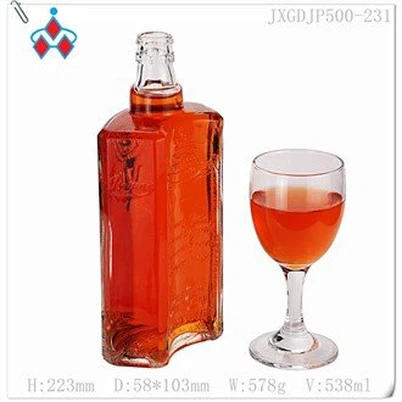
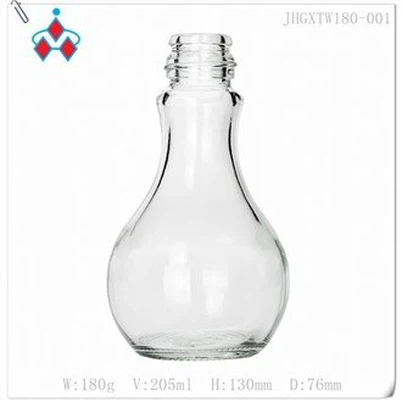
Why are there green, brown and white wine bottles?
Leave a message
When buying wine, you will often see that the colors of wine bottles are very different. Some are green, some are brown, and some are white. Some consumers believe that green and brown bottles can prevent light exposure, so they think that wines in green and brown bottles are of relatively better quality, while wines in white bottles are of relatively worse quality. Is this really the case? Before answering this question, let's first understand the development history of wine bottles.
1. The development history of wine bottles
The original container for storing wine was not a glass bottle, but a slender clay jar. Although these containers look good, they are very heavy and not easy to carry, and the clay material affects the flavor of the wine, so the clay jar was soon eliminated. It was not until the mid-to-late 17th century that glass bottles began to be used. However, since most glass is made of sand and limestone, it is inevitable that there will be some impurities in it. In addition, the production technology at that time was limited and it was impossible to remove the impurity compounds in the glass. Therefore, the glass bottles at that time presented the most natural color, that is, green. Later, with the advancement of technology, various wine bottles gradually came out, and brown, blue and white wine bottles appeared.
2. The benefits of green wine bottles
Oxygen is a double-edged sword for wine. Micro-oxygen can make the tannins and polyphenols of wine more mature and softened, the structure is smoother and more delicate, and the aroma will be complex and diverse. Excessive oxygen will make the tannins of wine weak, the structure is bland and tasteless, and the aroma will be lost quickly. However, some substances in the wine itself have strong antioxidant properties, such as resveratrol, which can prevent the oxidation of wine to a certain extent. But under strong light, the antioxidant properties of wine will be quickly destroyed, which will accelerate the excessive oxidation of wine and cause the wine to oxidize and deteriorate. In addition, ultraviolet rays will accelerate the movement of wine molecules and destroy the stability of wine.
Green wine bottles can block light from entering the wine, which can effectively prevent excessive oxidation of wine, provide a better environment for wine storage, and are conducive to the aging of wine. Green wine bottles are also widely used in Bordeaux, Burgundy, Rhone Valley, Mosel, Alsace and Champagne.

3. Benefits of brown wine bottles
Like green wine bottles, brown wine bottles have a certain blocking effect on light, which can prevent wine oxidation and is conducive to the aging and storage of wine. However, brown wine bottles filter light to a higher degree than green wine bottles, so brown wine bottles are more conducive to the aging and preservation of wine.
Many common wines such as American Cult Wine, Italian Barolo, Amarone and Australian Barossa Valley use brown wine bottles.
4. Benefits of white wine bottles
White wine bottles do not have much filtering ability for light, so white wine bottles are generally not suitable for the aging and storage of wine, and are mainly suitable for some white wines and rosé wines. White wine bottles can give people a fresh and transparent feeling, and can show the attractive color of wine to consumers. At the same time, it can make it very easy for consumers to observe whether the wine has precipitation and impurities, which is convenient for purchase.
White wine bottles are generally used for wines that are consumed within 1-2 years after bottling, such as Provence rosé wine in France and Chardonnay white wine in Chile. Some sweet wines, such as Sauternes noble rot wine in France, Austrian sweet wine, Canadian ice wine and Tokay in Australia, are also bottled in white wine bottles, but because they have very strong antioxidant capacity, appropriate light will not have a very big impact on the quality of the wine. At the same time, white wine bottles can be more conducive to observing the aging of sweet wines and facilitating the adjustment of storage conditions.
5. Is wine in green and brown bottles definitely better than white bottles?
Based on the above conclusions, green and brown bottles are generally used to store wines with longer aging potential, while white bottles are generally used to store ready-to-drink wines. Therefore, some consumers infer that the quality of wine in green and brown bottles must be higher than that in white bottles. But this is not the case. Although green and brown bottles have a good effect on filtering light, many low-quality wines are now also packed in green and brown bottles, while many fine wines are packed in white bottles. For example, many ordinary French table wines (VDT, VDP) are packed in green and brown bottles, while some top-grade noble rot wines are packed in white bottles.
Therefore, the color of the bottle is not a manifestation of the quality of the wine, and it cannot be said that the quality of wine in green and brown bottles must be higher than that of white bottles.
6. Can wine in green and brown bottles be stored without light protection?
Green and brown bottles have a blocking effect on light, but does it mean that they do not need to be stored in light protection? Of course not. If green and brown bottles are placed in strong sunlight, sometimes the wine will be scrapped in 1 day. Because green and brown bottles can block some light, but not all light. Therefore, placing wine in green and brown bottles under light for a long time is not conducive to the aging of the wine and may even harm the quality of the wine. Therefore, wine in green and brown bottles should also be stored away from light.