What are the factors that affect the price of a brown liquor bottle?
Leave a message

What are the factors that affect the price of a brown liquor bottle?
As a supplier of brown liquor bottles, I've witnessed firsthand the diverse range of elements that influence their pricing. In the world of liquor packaging, brown bottles are a staple, offering both functional and aesthetic benefits. Understanding the factors that contribute to their cost is crucial for both producers and consumers. In this blog, I'll delve into the key determinants that shape the price of a brown liquor bottle.
1. Material Quality
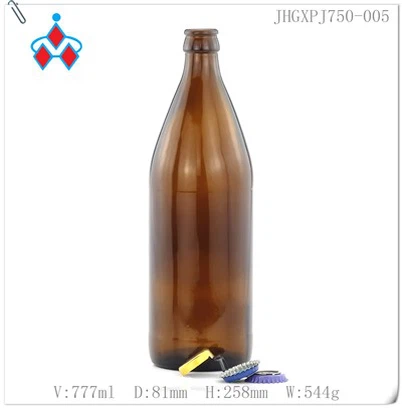
The quality of the glass used in the production of brown liquor bottles is a primary factor in determining their price. High - quality glass is free from impurities, has better clarity, and is more resistant to breakage. For instance, borosilicate glass, known for its thermal stability and durability, is more expensive than soda - lime glass. Brown glass, specifically, is often made with additives that give it its characteristic color and UV - blocking properties. The purity of these additives and the overall quality of the glass batch can significantly impact the cost. A bottle made from premium glass will generally command a higher price due to its enhanced performance and appearance.
2. Manufacturing Process
The manufacturing process of brown liquor bottles is complex and can vary in terms of cost. There are two main methods: blow - molding and pressing. Blow - molding is a more common technique for mass - producing liquor bottles. It involves heating the glass until it's malleable and then blowing air into it to form the desired shape. This process is relatively efficient for large - scale production, but it still requires precision equipment and skilled labor.
On the other hand, pressing is used for more intricate designs. It involves pressing the molten glass into a mold. This method is often used for creating bottles with detailed patterns or unique shapes. However, it is more labor - intensive and time - consuming, which drives up the cost. Additionally, processes like annealing, which involves slowly cooling the glass to relieve internal stresses, also add to the overall production cost.
3. Design and Customization
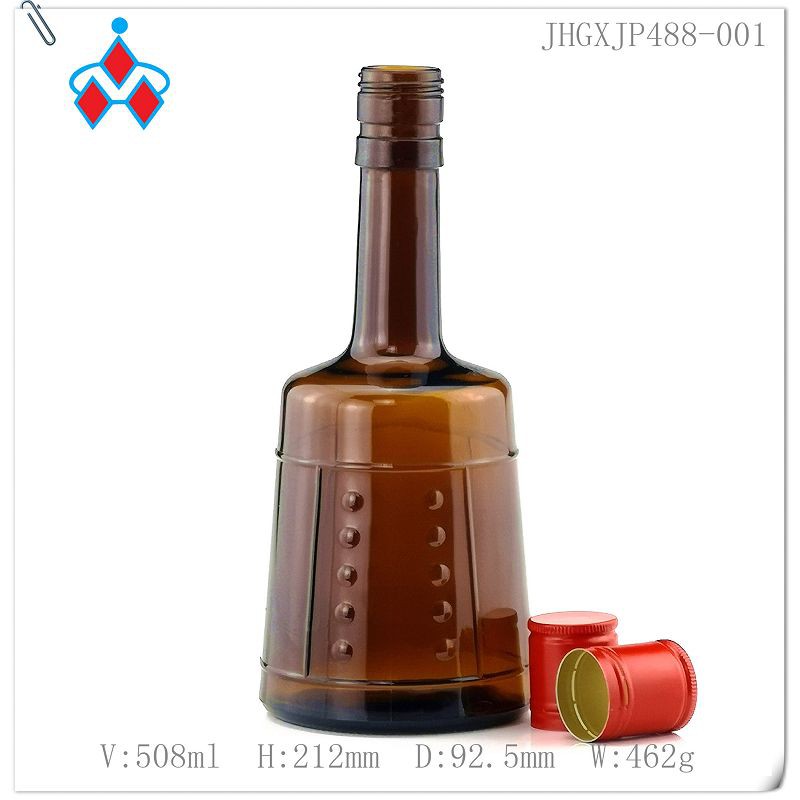
The design of a brown liquor bottle plays a significant role in its price. Standard, off - the - shelf designs are generally more affordable as they can be produced in large quantities with minimal setup costs. However, if a liquor producer wants a custom - designed bottle, the price can increase substantially. Custom designs may include unique shapes, embossed logos, or special finishes.
For example, a Long Amber Liquor Glass Bottle with a sleek, elongated shape may require specialized molds and additional manufacturing steps. Similarly, adding an embossed logo to the bottle involves creating a custom mold insert, which adds to the production cost. The more complex and unique the design, the higher the price of the bottle.
4. Size and Capacity
The size and capacity of a brown liquor bottle are also important factors in pricing. Larger bottles require more glass material, which increases the cost. A Glass Liquor bottle 720ml will generally be more expensive than a smaller 375ml bottle. Additionally, larger bottles may require more complex manufacturing processes to ensure they are structurally sound.
However, economies of scale can sometimes come into play. If a producer orders a large quantity of large - sized bottles, the per - unit cost may be reduced due to bulk production. But in general, as the size and capacity of the bottle increase, so does the price.
5. Quantity Ordered
The quantity of brown liquor bottles ordered has a direct impact on the price. When a customer places a large order, suppliers can often offer a lower per - unit price. This is because large - scale production allows for more efficient use of resources, reduced setup costs per bottle, and better negotiation power with raw material suppliers.
For example, if a small distillery orders a few hundred bottles, they may pay a relatively high price per bottle. But if a large - scale liquor producer orders thousands or even millions of bottles, they can take advantage of volume discounts. As a supplier, I always encourage customers to consider their long - term needs and order in larger quantities to get the best price.
6. Brand and Reputation
The brand and reputation of the bottle supplier can also affect the price. Well - established suppliers with a history of producing high - quality bottles may charge a premium for their products. These suppliers often have strict quality control measures in place, use the latest manufacturing technologies, and offer excellent customer service.
Customers are often willing to pay more for a bottle from a trusted brand because they have confidence in the product's quality and reliability. On the other hand, new or less - known suppliers may offer lower prices to attract customers, but the quality may be more variable.

7. Market Demand and Supply
The basic economic principles of supply and demand also influence the price of brown liquor bottles. If there is a high demand for brown liquor bottles, especially during peak seasons for liquor production, the price may increase. Conversely, if the supply of bottles exceeds the demand, prices may drop.
External factors such as changes in the liquor industry, new regulations, or fluctuations in the raw material market can also affect supply and demand. For example, if there is a shortage of a particular type of glass due to a disruption in the supply chain, the price of brown liquor bottles made from that glass may rise.
8. Packaging and Shipping
The cost of packaging and shipping brown liquor bottles is another factor that contributes to the overall price. Bottles need to be properly packaged to prevent breakage during transit. This may involve using specialized packaging materials such as foam inserts or corrugated boxes. The cost of these packaging materials adds to the price of the bottle.
Shipping costs also vary depending on the distance, the quantity of bottles shipped, and the shipping method. International shipping, for example, is generally more expensive than domestic shipping. As a supplier, I work closely with customers to find the most cost - effective packaging and shipping solutions, but these costs are still an important consideration.
Conclusion
In conclusion, the price of a brown liquor bottle is influenced by a multitude of factors, including material quality, manufacturing process, design, size, quantity ordered, brand, market demand, and packaging and shipping. As a supplier, I understand the importance of providing high - quality bottles at competitive prices. Whether you're a small - scale distillery or a large - scale liquor producer, I'm here to help you find the perfect brown liquor bottle for your needs.
If you're interested in learning more about our brown liquor bottle offerings or would like to discuss a custom order, I encourage you to reach out. We can work together to find the best solution that fits your budget and requirements. Let's start a conversation about your next liquor packaging project!
References
- "Glass Packaging: Science and Technology" by William C. LaCourse
- "The Art of Packaging: Designing for Success" by Denise P. DeMarsico
- Industry reports on the liquor packaging market from market research firms.