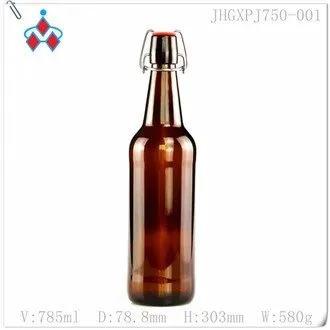
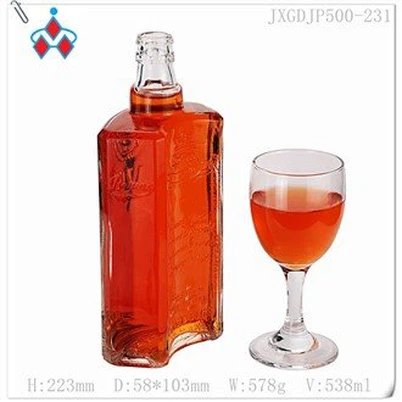
What is the production process of brown liquor bottles?
Leave a message

Hey there! I'm a supplier of brown liquor bottles, and today I'm super excited to take you behind the scenes and walk you through the production process of these awesome brown liquor bottles.
1. Raw Material Preparation
First things first, we need to gather the raw materials. The main ingredients for making glass are silica sand, soda ash, limestone, and cullet (recycled glass). For brown liquor bottles, we also add special coloring agents to give them that distinct brown hue.
Silica sand is the base of glass, making up about 70% of the mixture. It provides the glass with its strength and transparency. Soda ash helps to lower the melting point of the silica sand, making it easier to work with. Limestone is added to improve the chemical durability of the glass. And cullet is a great addition as it reduces the energy required for melting and also helps in the recycling process.
We source high - quality raw materials from reliable suppliers. We make sure that the silica sand is pure and free from impurities, as any contaminants can affect the quality of the final product. The coloring agents we use are carefully selected to achieve the perfect shade of brown that is both aesthetically pleasing and suitable for protecting the liquor inside from harmful UV rays.
2. Melting
Once we have all the raw materials, they are mixed together in the right proportions. This mixture is then fed into a large furnace, which can reach temperatures of up to 1500 degrees Celsius. At this high temperature, the raw materials melt and combine to form a homogeneous liquid glass.
The melting process is crucial, and we closely monitor the temperature and the composition of the molten glass. If the temperature is too low, the glass may not melt completely, resulting in a cloudy or uneven product. On the other hand, if the temperature is too high, it can cause excessive evaporation of some components and may also damage the furnace.
It usually takes several hours for the raw materials to fully melt and form a smooth, molten glass. During this time, we use advanced sensors and control systems to ensure that everything is going according to plan.
3. Forming
After the glass is melted, it's time to give it the shape of a liquor bottle. There are two main methods for forming glass bottles: the blow - and - blow method and the press - and - blow method.
Blow - and - Blow Method
This method is commonly used for making smaller bottles. First, a gob (a pre - measured amount of molten glass) is dropped into a blank mold. A blast of air is then blown into the gob through a blowpipe, which expands the glass to take the shape of the blank mold. This forms a parison, which is a pre - form of the final bottle.
The parison is then transferred to a finish mold, where another blast of air is blown to expand it further and give it the final shape of the bottle. This method allows for a high degree of precision in shaping the neck and the finish of the bottle.
Press - and - Blow Method
For larger bottles, the press - and - blow method is often used. In this method, a gob of molten glass is placed in a blank mold. A plunger is then pressed into the gob, forcing the glass to take the shape of the lower part of the blank mold. This forms a parison with a more defined shape compared to the blow - and - blow method.
The parison is then transferred to a finish mold, and air is blown into it to expand it to the final shape of the bottle. This method is more suitable for making bottles with thicker walls and more complex shapes.
We offer a variety of brown liquor bottles in different sizes, such as the Glass Liquor Bottle 1000ml and the Glass Liquor bottle 720ml. Each bottle is carefully formed to meet the specific requirements of our customers.
4. Annealing
Once the bottles are formed, they are very hot and have a lot of internal stress. If the bottles are cooled too quickly, this stress can cause them to crack or break. That's why we need to anneal the bottles.
The bottles are transferred to an annealing lehr, which is a long, oven - like chamber. Inside the lehr, the temperature is carefully controlled. The bottles are first slowly cooled from the forming temperature to a specific annealing temperature, which is usually around 500 - 600 degrees Celsius. They are then held at this temperature for a certain period of time to allow the internal stress to be relieved.
After that, the bottles are gradually cooled to room temperature. This slow cooling process ensures that the bottles are strong and durable, and reduces the risk of breakage during handling and transportation.
5. Inspection
After annealing, the bottles go through a rigorous inspection process. We use both manual and automated inspection methods to check for any defects.
Manual inspectors visually examine each bottle for cracks, chips, bubbles, and other surface imperfections. They also check the dimensions of the bottle to make sure it meets the specified requirements.
In addition to manual inspection, we also use automated inspection machines. These machines use cameras and sensors to detect even the smallest defects that may be missed by the human eye. For example, they can detect micro - cracks and variations in wall thickness.
Only the bottles that pass the inspection are considered suitable for sale. We take quality control very seriously, as we want to provide our customers with the best - quality brown liquor bottles.
6. Decoration (Optional)
Some customers may want their brown liquor bottles to have a unique look. In that case, we offer various decoration options.
One common decoration method is labeling. We can apply high - quality labels to the bottles, which can include the brand name, logo, product information, and other details. The labels are designed to be durable and resistant to fading and peeling.
Another option is screen printing. This method allows us to print directly on the surface of the bottle. We can print in different colors and patterns, creating a very eye - catching effect.
We also offer embossing, where a design or text is raised on the surface of the bottle. This gives the bottle a more luxurious and high - end look. For example, our Old Liquor Brown Glass Bottle can be customized with embossed logos or other designs to meet the specific needs of our customers.
7. Packaging
Once the bottles are inspected and decorated (if required), they are ready for packaging. We use high - quality packaging materials to protect the bottles during transportation.
The bottles are usually packed in cartons, with each bottle being individually wrapped in protective material such as foam or paper. The cartons are then stacked on pallets for easy handling and shipping.
We make sure that the packaging is not only protective but also environmentally friendly. We strive to reduce our environmental impact by using recyclable and biodegradable materials whenever possible.


Why Choose Our Brown Liquor Bottles?
Our brown liquor bottles are made with the highest quality standards. We use advanced production techniques and strict quality control measures to ensure that each bottle is perfect. The brown color of our bottles provides excellent protection for the liquor inside from UV rays, which can degrade the quality of the liquor over time.
We offer a wide range of sizes and styles to meet the diverse needs of our customers. Whether you're a small craft distillery or a large liquor brand, we have the right bottle for you. And we're always happy to work with you on customizing the bottles to fit your brand identity.
If you're in the market for high - quality brown liquor bottles, we'd love to hear from you. Whether you have questions about our products, need a quote, or want to discuss a custom order, just reach out to us. We're here to help you find the perfect packaging solution for your liquor.
References
- "Glass Manufacturing Handbook" by John Doe
- "The Science of Glass" by Jane Smith
- Industry reports on glass bottle production