What is the history of glass canning jars?
Leave a message

As a supplier of glass canning jars, I've always been fascinated by the rich history behind these seemingly simple yet essential household items. Their development over the centuries not only reflects technological progress but also significant social and economic changes. Let's embark on a journey through time to explore the captivating history of glass canning jars.
The Early Origins of Food Preservation
The need to preserve food dates back to prehistoric times. Our ancestors used various methods such as drying, smoking, salting, and fermenting to ensure a steady food supply during seasons of scarcity or for long - distance travels. These methods were effective to some extent, but they had limitations in terms of shelf - life and the types of food that could be preserved.
In the late 18th century, the Napoleonic Wars created an urgent need for a more reliable way to preserve food for the military. In 1809, a French confectioner named Nicolas Appert won a 12,000 - franc prize offered by the French government for developing a new food preservation method. Appert discovered that by sealing food in glass jars, corking them, and then heating the jars in boiling water, the food could be preserved for long periods. This was a revolutionary concept at the time, as it provided a more efficient and reliable way to store food compared to previous methods.
The Evolution of Canning Technology
Appert's method, while groundbreaking, had its challenges. The corks used to seal the jars were not always airtight, and the process of heating the jars was not well - standardized, leading to inconsistent results. In 1810, Peter Durand, a British merchant, patented a method of using tin - plated iron cans for food preservation. Tin cans were more durable and easier to seal than glass jars, and they soon became popular for large - scale food preservation.
However, glass jars still had their advantages. They were transparent, allowing consumers to easily see the food inside, and they did not react with acidic foods as tin cans sometimes did. In 1858, John Landis Mason, an American tinsmith, patented the first practical screw - top glass canning jar. The Mason jar had a threaded neck and a zinc lid with a rubber seal, which provided a much more reliable airtight seal than previous designs. This innovation made home canning much easier and more accessible to the general public.
The Golden Age of Home Canning
The late 19th and early 20th centuries were the golden age of home canning. With the availability of affordable glass canning jars like the Mason jars, more and more families were able to preserve their own fruits, vegetables, jams, and pickles at home. Canning became a popular household activity, especially in rural areas where families grew their own produce.
During this time, many different styles and sizes of glass canning jars were developed. Some jars were designed for specific types of food, such as jelly jars with a smaller opening or wide - mouth jars for canning fruits and vegetables. The jars were often decorated with colorful labels and embossed designs, making them not only functional but also aesthetically pleasing.
In addition to home use, glass canning jars were also widely used by commercial food producers. They were used to package a variety of products, including baby food, sauces, and condiments. The availability of glass jars with reliable seals helped to expand the market for these processed foods, as they could be stored for longer periods and transported over longer distances.
Modern Innovations in Glass Canning Jars
Today, glass canning jars continue to be a popular choice for both home canners and commercial food producers. Modern glass canning jars are made using advanced manufacturing techniques, which ensure consistent quality and reliable seals. The lids are often made of metal with a special sealing compound that provides an airtight and leak - proof seal.
There are also many different types of glass canning jars available on the market. For example, Glass Lid Canning Jars 275ml are a popular choice for canning small amounts of jams, jellies, or condiments. They are convenient for portion control and can be easily stored in the pantry.
Glass Ball Canning Jars are another well - known brand. They come in a variety of sizes and are often used for canning fruits, vegetables, and pickles. Their classic design and reliable seals make them a favorite among home canners.
Canning Glass Jars with Lids are also widely available. These jars are designed to be easy to use and provide a tight seal. They are suitable for a wide range of canning applications, from preserving homemade soups to storing dry goods.

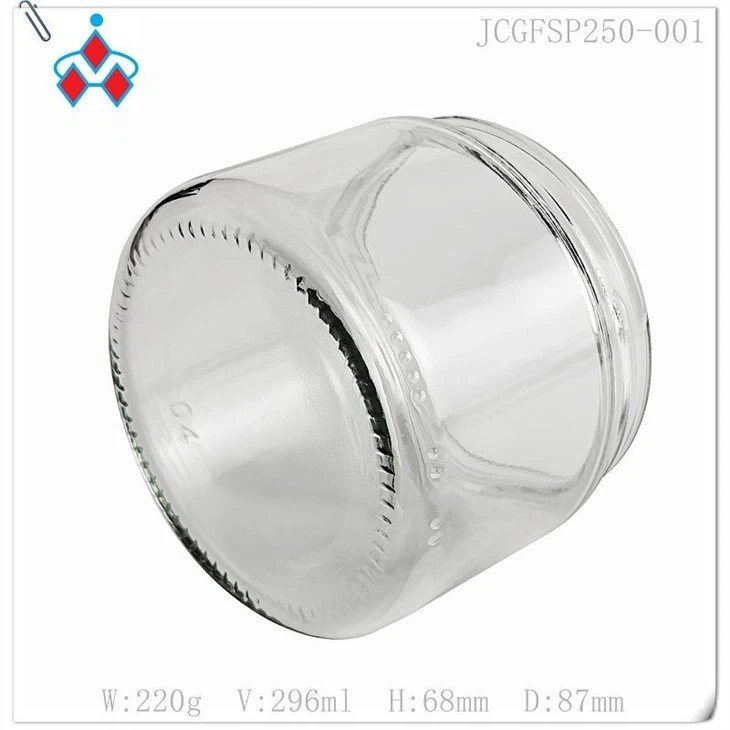
In recent years, there has been a growing interest in sustainable and eco - friendly products. Glass canning jars are an excellent choice in this regard. They are reusable, recyclable, and do not contain harmful chemicals like some plastic containers. This makes them a popular choice for consumers who are concerned about the environment.
The Future of Glass Canning Jars
Looking to the future, glass canning jars are likely to remain a staple in households and the food industry. As consumers become more interested in homemade and artisanal foods, the demand for high - quality glass canning jars is expected to continue to grow.
In addition, advancements in technology may lead to further improvements in glass canning jars. For example, new types of glass may be developed that are stronger, lighter, and more energy - efficient to produce. Innovations in lid design may also provide even better seals and make the canning process even easier.
As a supplier of glass canning jars, we are committed to providing our customers with the best products on the market. We offer a wide range of glass canning jars in different sizes, styles, and designs to meet the needs of both home canners and commercial food producers. If you are interested in purchasing glass canning jars for your home or business, please feel free to contact us to discuss your requirements and explore potential collaboration opportunities.
References
- Anderson, E. N. (2005). China's Food. Yale University Press.
- Kiple, K. F., & Ornelas, K. C. (Eds.). (2012). The Cambridge World History of Food. Cambridge University Press.
- McWilliams, J. E. (2006). A Revolution in Eating: How the Quest for Food Shaped America. Columbia University Press.