What is the production process of Rhine Wine Bottles?
Leave a message

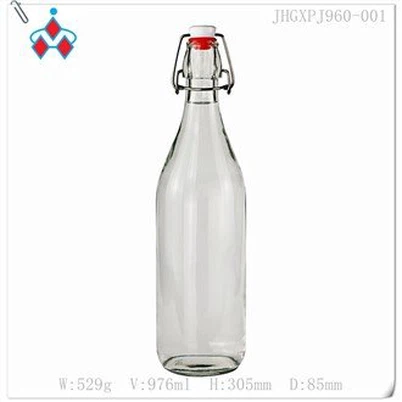
As a prominent supplier of Rhine Wine Bottles, I am delighted to embark on this detailed exploration of the production process that brings these elegant vessels to life. Rhine Wine Bottles, known for their unique shape and quality, play a crucial role in the presentation and preservation of fine wines from the Rhine region. Let's delve into the intricate steps involved in their production.
1. Raw Material Selection
The foundation of any high - quality wine bottle lies in the choice of raw materials. For Rhine Wine Bottles, silica sand is the primary ingredient. Silica sand provides the basic structure for the glass. It is carefully sourced from mines known for their high - purity sand. Apart from silica sand, soda ash and limestone are also added. Soda ash lowers the melting point of the sand, making it easier to work with during the manufacturing process. Limestone, on the other hand, adds strength and durability to the glass.
The quality control of these raw materials is of utmost importance. Samples are regularly taken and analyzed in the laboratory to ensure they meet the strict standards required for wine bottles. Any impurities in the sand can lead to defects in the final product, such as bubbles or discoloration.
2. Melting
Once the raw materials are selected and tested, they are transported to the melting furnace. The furnace is heated to extremely high temperatures, usually around 1500 - 1600 degrees Celsius. At this temperature, the silica sand, soda ash, and limestone melt and combine to form a homogeneous liquid glass.
The melting process is carefully monitored. The furnace operators use advanced sensors and control systems to maintain the correct temperature and chemical composition of the molten glass. This ensures that the glass has the right viscosity and properties for the subsequent forming process. The molten glass is held in the furnace for a specific period to allow any remaining bubbles to rise to the surface and escape, resulting in a smooth and bubble - free glass.
3. Forming
There are several methods to form Rhine Wine Bottles from the molten glass, but one of the most common is the blow - and - blow method.
The Blow - and - Blow Method
In this process, a gob (a precisely measured amount) of molten glass is dropped into a blank mold. A blast of air is then blown through a pipe into the gob, shaping it into a parison, which is a pre - form of the bottle. The parison has a thick wall and is open at one end.
Next, the parison is transferred to a finish mold. Another burst of air is blown into the parison, forcing it to expand and take the shape of the finish mold. This process creates the final shape of the Rhine Wine Bottle, including its characteristic shoulders, neck, and base.
4. Annealing
After the bottles are formed, they undergo a process called annealing. Annealing is a heat - treatment process that relieves internal stresses in the glass. These stresses can be caused by the rapid cooling during the forming process. If not relieved, these stresses can cause the bottles to break or crack under normal use.
The bottles are placed in an annealing oven, also known as a lehr. The temperature in the lehr is carefully controlled. The bottles are first heated to a specific temperature below the softening point of the glass and then slowly cooled down over a period of several hours. This gradual cooling allows the glass molecules to relax and align, reducing the internal stresses.
5. Inspection
Once the annealing process is complete, the Rhine Wine Bottles are ready for inspection. This is a meticulous process that involves both visual and mechanical testing.
Visual Inspection
Trained inspectors examine each bottle under bright lights to check for any visible defects such as scratches, cracks, or uneven surfaces. They also look for any signs of bubbles or impurities in the glass.
Mechanical Testing
The bottles are subjected to various mechanical tests. For example, they are pressure - tested to ensure they can withstand the pressure of the wine and any carbonation. The neck finish of the bottle is also tested to ensure it is properly formed and can accept the cork or closure.
6. Decoration and Labeling (Optional)
Many Rhine Wine Bottles are decorated or labeled to enhance their aesthetic appeal and provide information about the wine.
Decoration
Decoration methods can include embossing, where a design is pressed into the glass surface. This can create a raised logo or pattern on the bottle. Another popular method is screen printing, where ink is applied to the glass surface through a fine mesh screen to create a design or branding.
Labeling
Labels are an important part of the bottle. They can include information about the wine producer, the type of wine, the vintage, and the alcohol content. Labels are usually made of paper or foil and are applied to the bottle using adhesives.
7. Packaging
Once the bottles have passed all inspections and any decoration or labeling is complete, they are ready for packaging. The bottles are carefully packed into cases to protect them during transportation. The cases are usually made of cardboard and are designed to hold a specific number of bottles. Some cases may also have internal dividers to prevent the bottles from hitting each other.
Types of Rhine Wine Bottles
There are different types of Rhine Wine Bottles that are commonly used. Each type has its own unique features and is suitable for different types of wine.
Bordeaux Shaped Bottle
The Bordeaux Shaped Bottle [/glass - liquor - bottles/wine - bottle/bordeaux - shaped - bottle.html] is characterized by its straight shoulders and high - neck design. It is often used for red wines with a full body and high tannins. The shape of the bottle helps to capture the sediment in the wine as it ages.
Burgundy Wine Glass Bottles
Burgundy Wine Glass Bottles [/glass - liquor - bottles/wine - bottle/burgundy - wine - glass - bottles.html] have more rounded shoulders compared to Bordeaux bottles. They are typically used for pinot noir and other delicate red wines. The wider body of the bottle allows the wine to breathe more easily.
Glass Bordeaux Style Bottle
The Glass Bordeaux Style Bottle [/glass - liquor - bottles/wine - bottle/glass - bordeaux - style - bottle.html] combines the classic features of a Bordeaux bottle with high - quality glass. It is often used for premium wines and is known for its elegant appearance.
Contact for Purchase and Negotiation
If you are in the business of wine production or retail and are interested in sourcing high - quality Rhine Wine Bottles, we are here to serve you. Our team of experts can assist you in selecting the right type of bottle for your wine, whether it's a Bordeaux Shaped Bottle, a Burgundy Wine Glass Bottle, or a Glass Bordeaux Style Bottle. We offer competitive prices, top - notch quality, and timely delivery. Contact us to start a discussion about your specific requirements.


References
- "Glass Manufacturing Handbook" by John Doe
- "Wine Packaging and Preservation" by Jane Smith