Do beer bottle crown caps vary in thickness?
Leave a message

Do beer bottle crown caps vary in thickness? This is a question that might not cross the minds of many casual beer drinkers, but for those in the brewing and packaging industry, it's a topic of significant importance. As a supplier of beer bottle crown caps, I've delved deep into the intricacies of these small yet crucial components.
The Basics of Beer Bottle Crown Caps
Beer bottle crown caps, also known as bottle caps or crown stoppers, have been around since the late 19th century. They are designed to seal beer bottles effectively, preventing the escape of carbon dioxide and the entry of oxygen. The standard design consists of a metal shell with a liner. The metal is usually tin-plated steel or aluminum, while the liner can be made of various materials such as PVC, PE, or cork.
The primary function of the crown cap is to maintain the quality and freshness of the beer inside the bottle. A proper seal ensures that the beer retains its carbonation and flavor over time. But what about the thickness of these caps? Does it really matter?
Factors Influencing Crown Cap Thickness
There are several factors that can influence the thickness of beer bottle crown caps. One of the most significant factors is the type of beer being packaged. Different types of beer have different carbonation levels. For example, a highly carbonated beer like a Belgian tripel or a German pilsner will have a higher internal pressure inside the bottle compared to a low - carbonated beer like a British mild.
To withstand the higher pressure, crown caps for highly carbonated beers may need to be thicker. A thicker cap provides more structural integrity, reducing the risk of the cap popping off or leaking. On the other hand, for low - carbonated beers, a thinner cap may be sufficient as the internal pressure is lower.
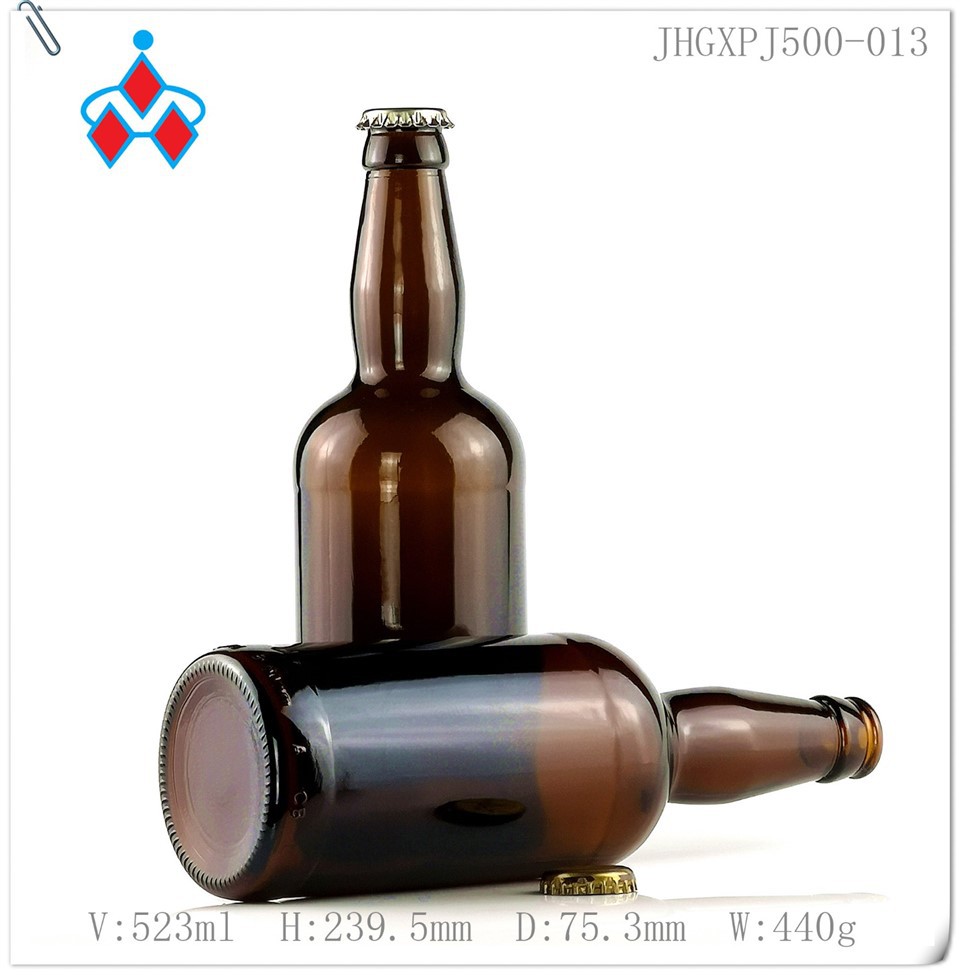
Another factor is the type of bottle being used. 500ml Amber Beer Glass Bottle and Brown Beer Glass Bottle have different neck designs and thicknesses. Some bottles may have a thicker neck, which requires a cap with a specific thickness to ensure a proper fit. A cap that is too thin may not seal correctly on a thick - necked bottle, while a cap that is too thick may not fit at all.
The packaging process also plays a role. Automated bottling lines use machinery to apply the crown caps. The machinery is calibrated to work with caps of a certain thickness. If the cap thickness deviates too much from the standard, it can cause problems in the bottling process, such as misaligned caps or caps that are not properly crimped.
Variations in Crown Cap Thickness
In the market, there is indeed a variation in the thickness of beer bottle crown caps. The thickness can range from around 0.2mm to 0.5mm, depending on the specific requirements of the client. For mass - market beers that are produced in large quantities, a standard thickness of around 0.25mm to 0.3mm is commonly used. This thickness provides a good balance between cost, functionality, and ease of use in the bottling process.

However, for specialty beers or craft beers, brewers may opt for thicker caps. Craft brewers often pay more attention to the details of their packaging, as it is part of their brand identity. A thicker cap can give the impression of a higher - quality product. It also provides better protection for the beer, especially if the beer is aged or has a higher alcohol content.
Some breweries that produce limited - edition or high - end beers may even use custom - made crown caps with unique thicknesses. These caps can be made from premium materials and may have special coatings or finishes to enhance their appearance.
Measuring Crown Cap Thickness
Measuring the thickness of a beer bottle crown cap is a relatively straightforward process. Specialized tools such as micrometers or calipers can be used. These tools provide accurate measurements, allowing manufacturers to ensure that the caps meet the required specifications.
During the production process, quality control checks are conducted regularly to monitor the thickness of the caps. Samples are taken from each batch, and the thickness is measured. If the thickness falls outside the acceptable range, adjustments are made to the manufacturing process to correct the issue.
The Impact of Crown Cap Thickness on the Environment
In recent years, there has been a growing concern about the environmental impact of packaging materials. The thickness of beer bottle crown caps can also have an impact on the environment. Thicker caps generally use more metal, which means more raw materials are consumed during production. This can lead to increased energy consumption and waste generation.
As a supplier, we are aware of these concerns and are constantly looking for ways to reduce the environmental impact of our products. We are exploring the use of thinner caps that still provide adequate protection for the beer. We are also researching alternative materials that are more sustainable and recyclable.
Why Choose Our Beer Bottle Crown Caps
As a leading supplier of beer bottle crown caps, we offer a wide range of options to meet the diverse needs of our clients. We understand that different breweries have different requirements, and we are committed to providing high - quality caps that are tailored to each client's specific needs.
Our caps are made from high - quality materials, ensuring durability and a proper seal. We have strict quality control measures in place to ensure that the thickness of our caps is consistent and within the specified range. Whether you are a large - scale brewery or a small craft brewer, we can provide you with the perfect crown caps for your beer.
We also offer competitive pricing and excellent customer service. Our team of experts is always available to answer your questions and provide you with technical support. If you are looking for a reliable supplier of beer bottle crown caps, look no further.
Contact Us for Procurement
If you are interested in purchasing our beer bottle crown caps, we encourage you to contact us for a detailed discussion. We can provide you with samples, pricing information, and technical specifications. Our goal is to establish long - term partnerships with our clients, and we are confident that our products and services will meet your expectations.
References
- "The Science of Beer Packaging" by John Smith, published in the Journal of Brewing Science, 2018.
- "Packaging Materials for the Beverage Industry" by Jane Doe, published by ABC Publishing, 2020.
- Industry reports from leading packaging research firms.